
Safety and quality are paramount on a construction site. All equipment – no matter how large or small – needs to be the highest quality.
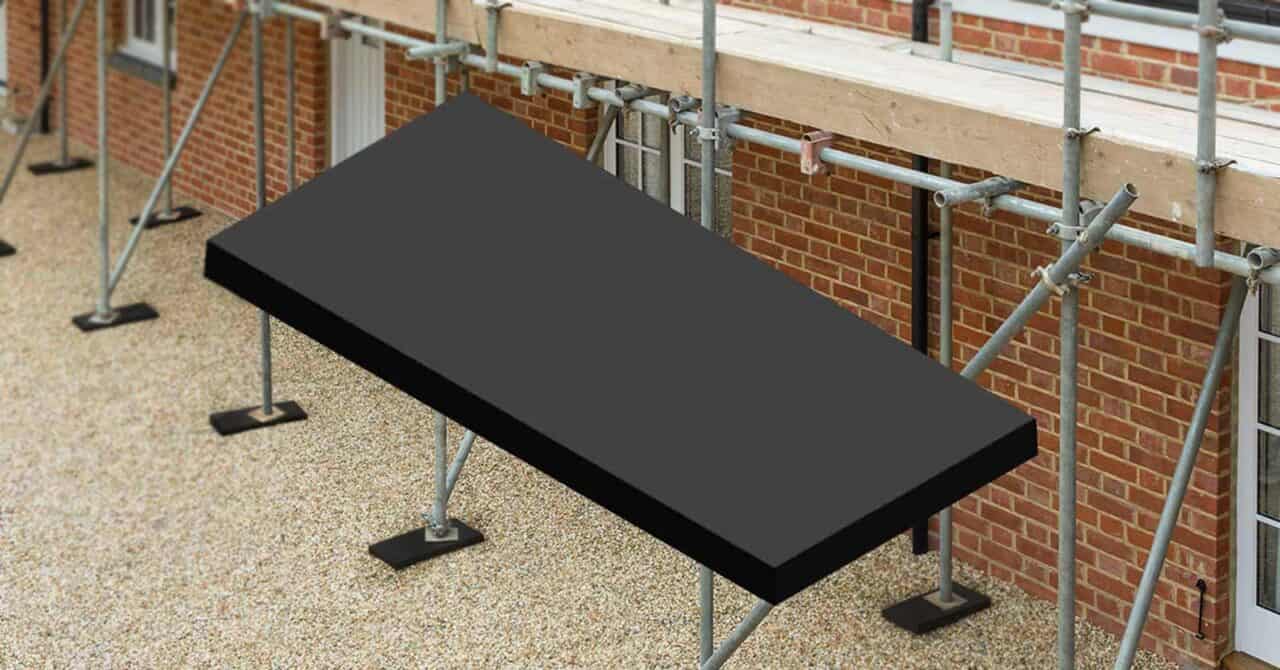
Sole boards are the foundation of the scaffolding setup. Too often, they are worn down or poor quality. This is a major lapse in safety that can lead to accidents.
At Van Dyck, we have developed recycled rubber scaffolding boards that outperform timber and plastic, while also being eco-friendly and long-lasting.
How our rubber sole boards are made
Scaffolding boards – also known as sole boards, sole plates, sole pads or scaffolding base boards – are used under the feet of the scaffolding framework to provide a sturdy footprint and to stop the structure sinking into the ground, damaging new surfaces or becoming unbalanced.
This is why scaffolding sole boards must be strong, durable, non-slip and impervious to water damage, electrical currents and sun deterioration.
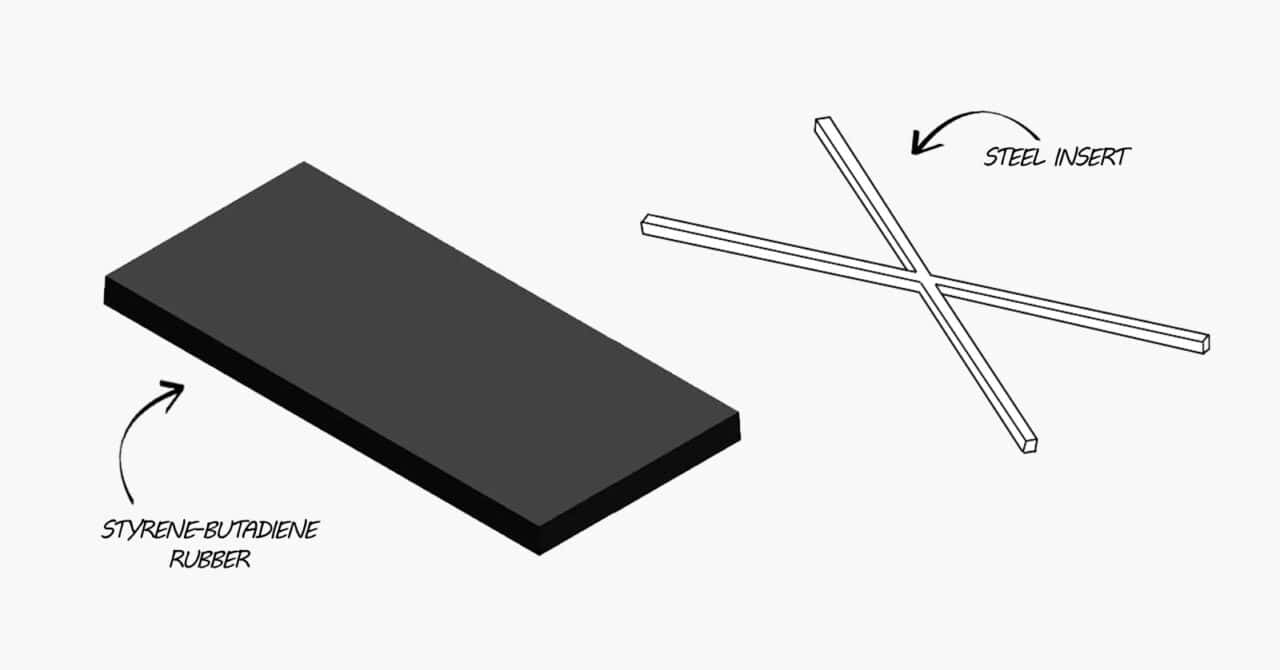
We use recycled rubber from end-of-life truck tyres to make our scaffolding sole boards. The foot is made of highly durable styrene-butadiene rubber (SBR), which is reinforced with a steel X-insert to give it extra strength and rigidity.
The resulting sole board is water- and UV-resistant, non-conductive and extremely durable. They offer superior stability and non-slip properties.
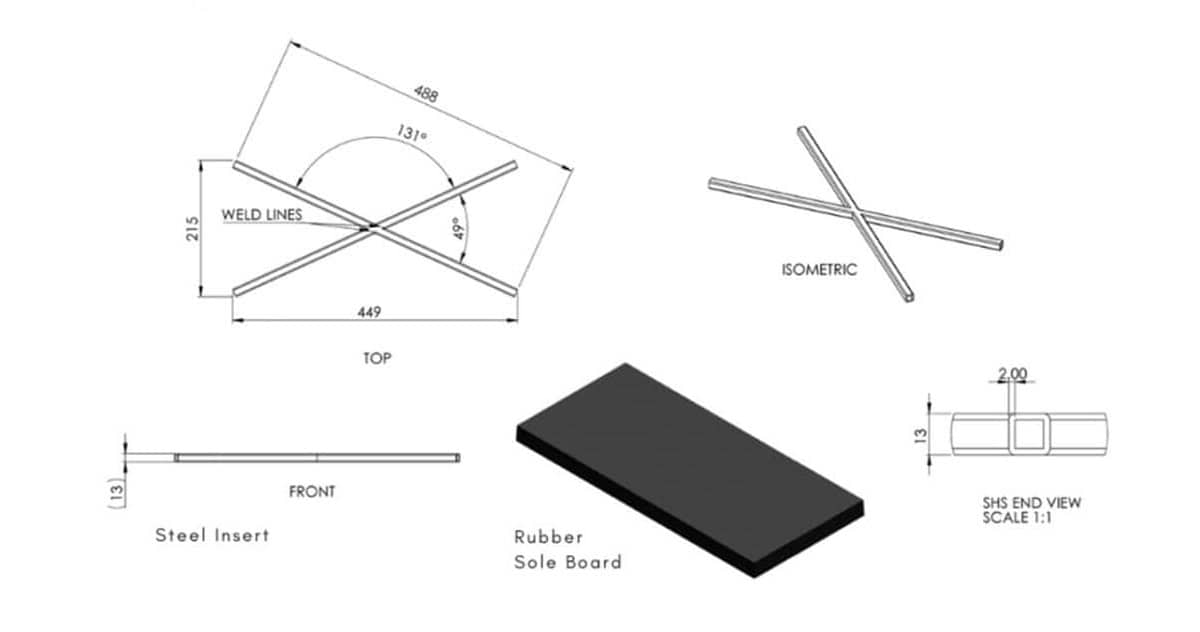
Our scaffolding sole boards measure 230 x 500 mm and are 30 mm thick. Each sole board weighs 3.5 kilograms, including the steel reinforcement.
What makes our rubber scaffolding boards better
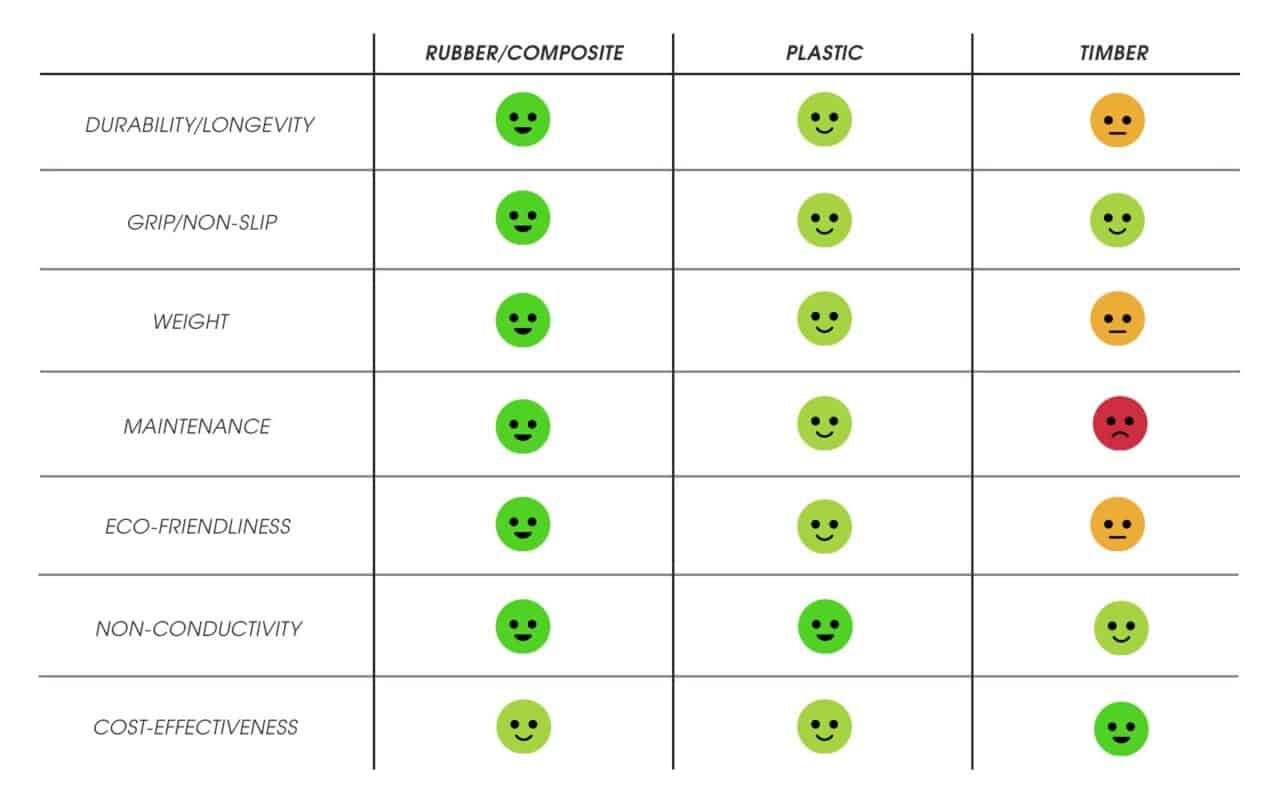
Traditionally, wooden planks have been used as sole boards. However, they’re prone to absorbing water, splintering, cracking and warping. Rubber sole boards are 100% waterproof and don’t crack or bend out of shape.
Plastic sole boards are also used as an alternative to the old wooden ones, but their rigidity can make them more prone to slippage. Also, they are inflexible and can be broken under heavy impact.
Rubber boards have neither of these issues. They are extremely resilient and offer superior non-slip properties. They have been designed to meet or exceed industry standards for safety and performance.
Plastic and wood boards are not as eco-friendly as they could be. Plastic isn’t always recycled and wood can contribute to deforestation. By comparison, rubber sole boards are made from recycled materials and are 100% recyclable.
Timber and plastic versus rubber
How to use our rubber sole boards
Our rubber scaffolding boards have many advantages, but you must still take care to utilise them properly according to scaffolding safety guidelines.
Only use them on suitable ground conditions. Sloped, muddy, very sandy or rocky areas may not be suitable for scaffolding, no matter what type of sole board you use.
Always centre the sole board under the scaffolding base plate and slot the scaffolding pole into the plate. Do not try to slot a sole board under assembled scaffolding.
Ensure you follow the approved layout plan for the scaffolding that has been signed off by a safety officer, manager or foreman.
Where to buy rubber sole boards
Our recycled rubber scaffolding boards are available in our online shop. We deliver throughout South Africa, with free delivery on all orders.
At Van Dyck, we also manufacture a range of flooring and acoustic products using rubber crumb that has been recycled from old truck tyres.
Our eco-friendly products help reduce harmful tyre dumps across South Africa for cleaner, healthier communities. Browse our website to see our full range of products.


